Affordable Places to Retire With Mild Weather
An evidence-screened look at two U.S. retirement destinations -- each with a below-national 2024 BEA regional price level and NOAA climate normals inside HomeAfterWork's mild-winter, mild-summer range -- along with the specific tradeoffs each one still carries.
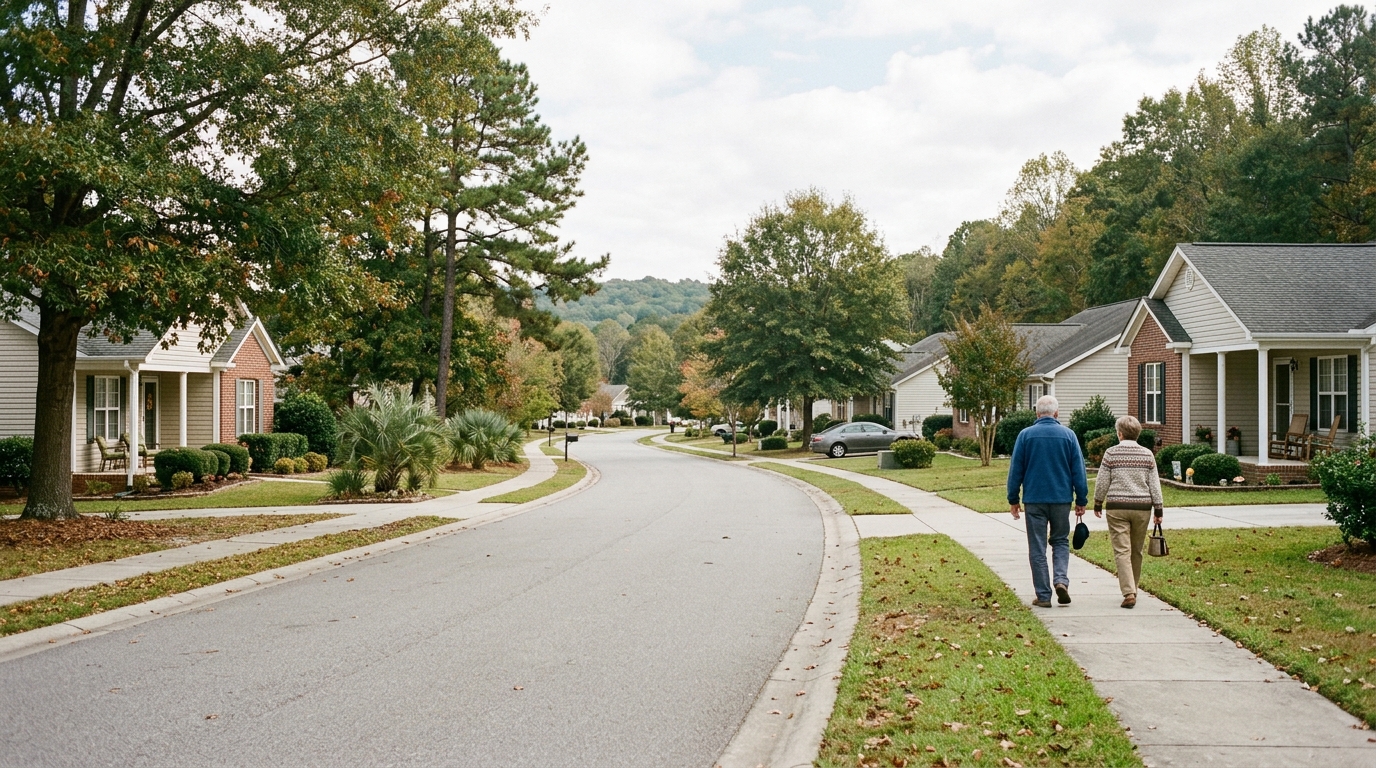
HomeAfterWork screened a defined set of U.S. retirement destinations against two separate tests: a 2024 U.S. Bureau of Economic Analysis Regional Price Parity below the national benchmark of 100, and 1991-2020 NOAA climate normals showing a coldest-month average of at least 40 degrees F and a hottest-month average no higher than 80 degrees F. Two destinations cleared both: Greenville, South Carolina, and Myrtle Beach, South Carolina.
That doesn't mean these are the only places in the country that could fit someone's idea of affordable or mild weather. It means that within the specific universe of destinations HomeAfterWork tested, using this specific methodology, these two cleared both bars. Below is exactly how each one got there, what the numbers do and don't tell you, and how the two compare.
See how these results stack up against your own priorities with the free HomeAfterWork quiz.
How We Screened These Destinations
We treated affordability and climate as two separate questions, tested independently. A destination had to clear both.
Affordability: 2024 BEA Regional Price Parity below 100
The U.S. Bureau of Economic Analysis publishes a Regional Price Parity (RPP) for states, metro areas, and the nonmetropolitan portions of states each year. It measures how a region's overall price level compares to the national average, which is set at 100. An RPP of 93 means the region's price level is about 93% of the national price level for the goods and services measured that year.
That's a broad regional price-level measure, not a personal retirement budget. It doesn't establish what a specific home costs, what rent runs, what property taxes or insurance premiums look like, or what healthcare will cost you -- and it doesn't prove a destination is cheap for any particular retiree.
Climate: 1991-2020 NOAA/NCEI temperature normals
For this guide, HomeAfterWork defines "mild weather" as a balance of relatively moderate typical winter and summer temperatures. A destination had to have a 1991-2020 NOAA coldest-month average temperature of at least 40 degrees F, and a hottest-month average temperature no higher than 80 degrees F. These are HomeAfterWork's editorial thresholds, not a scientific definition of "mild" -- they're one reasonable way to define the balance, not the only one.
It's also worth being clear about what a climate normal is. A monthly average temperature describes typical long-term conditions over a 30-year period. It doesn't tell you whether a place gets occasional hard freezes, heat waves, humidity, snow, hurricanes, storms, flooding, drought, or wildfire. Two places can have the same monthly average and very different day-to-day experiences.
We didn't combine these two screens into a single score. A destination either cleared both, or it didn't.
Greenville, South Carolina
Why it passed. Greenville's metro area had a 2024 BEA Regional Price Parity of 93.260 -- below the national benchmark of 100. Its coldest month, January, has a 1991-2020 NOAA normal average temperature of 40.7 degrees F, at HomeAfterWork's 40 degree floor. Its hottest month, July, averages 77.5 degrees F, under the 80 degree ceiling.
What the numbers mean. The 93.260 figure applies to the Greenville-Anderson-Mauldin, SC metro area as a whole -- a direct, metro-level BEA figure, not a proxy for a broader region. It tells you the metro's overall price level runs modestly below the national average; it says nothing about a specific home, neighborhood, or your own budget. On climate, it's worth being direct: Greenville clears the winter threshold by 0.7 degrees F. That's a real pass, but a narrow one, not a wide cushion. If a mild winter specifically -- not just an average that lands at or above 40 degrees F -- matters a lot to you, Greenville is worth a closer look rather than an assumption.
What could matter to your decision. Greenville sits inland, in the state's upstate foothills -- a different setting than a coastal destination. If mountains and forest appeal to you more than ocean, that's a meaningful distinction from Myrtle Beach, independent of the affordability and climate numbers.
Explore the Greenville, South Carolina destination profile for more on the area.
Myrtle Beach, South Carolina
Why it passed. Myrtle Beach's metro area had a 2024 BEA Regional Price Parity of 93.642 -- also below the national benchmark of 100. Its coldest month, January, averages 44.5 degrees F. Its hottest month, July, averages 79.5 degrees F.
What the numbers mean. The 93.642 figure applies directly to the Myrtle Beach-Conway-North Myrtle Beach, SC-NC metro area -- again, a direct metro-level figure, not a proxy. As with Greenville, it describes a regional price level, not a personal cost of living. On climate, Myrtle Beach's winter margin is wider than Greenville's -- 4.5 degrees F above the 40 degree floor, versus Greenville's 0.7 degrees F. Its summer margin runs the other way: July averages 79.5 degrees F, just 0.5 degrees F under the 80 degree ceiling, a narrower cushion than Greenville has in summer (2.5 degrees F under). Myrtle Beach isn't a uniformly bigger climate pass than Greenville -- it's ahead on winter and tighter on summer.
What could matter to your decision. Myrtle Beach is a coastal, beach destination, which is a big part of its appeal for many retirees. It also comes with a real tradeoff the temperature normals don't capture: FEMA's National Risk Index rates Horry County -- the county that includes Myrtle Beach -- Very High for hurricane hazard, both on its hurricane Expected Annual Loss rating and its hazard-specific Risk Index Rating. Passing HomeAfterWork's mild-weather screen has nothing to do with hurricane exposure; they're separate measures entirely. Anyone weighing Myrtle Beach should treat hurricane preparedness, insurance cost and availability, and evacuation planning as their own separate research item, not something this screen already accounts for.
Explore the Myrtle Beach, South Carolina destination profile for more on the area.
Greenville vs. Myrtle Beach: Side-by-Side Comparison
| Greenville, SC | Myrtle Beach, SC | |
|---|---|---|
| 2024 BEA Regional Price Parity | 93.260 | 93.642 |
| BEA geography | Greenville-Anderson-Mauldin, SC MSA | Myrtle Beach-Conway-North Myrtle Beach, SC-NC MSA |
| Coldest month | January, 40.7 degrees F | January, 44.5 degrees F |
| Hottest month | July, 77.5 degrees F | July, 79.5 degrees F |
| Setting | Inland, upstate foothills | Coastal, beach |
| Hurricane-hazard context | Not evaluated here | Horry County: Very High (FEMA National Risk Index, hurricane hazard) |
This is a comparison, not a ranking. Neither destination is scored against the other, and neither is presented as the better overall choice.
Why the List Is Short -- and What That Means for You
Two destinations is a short list by the standards of a typical "places to retire" roundup. That's a direct result of applying both screens at the same time, not a limitation we tried to work around.
Affordability and moderate year-round temperatures don't always show up in the same place. Plenty of destinations clear one bar and miss the other -- a region can have a below-national price level and still run colder or hotter than HomeAfterWork's thresholds, or have genuinely mild temperature averages and a price level above the national benchmark. Requiring both at once, using specific numeric thresholds, narrows the field by design.
That's not a claim that Greenville and Myrtle Beach are the only affordable, mild-weather places in the United States, or the two best places to retire anywhere. It's a statement about what cleared this particular, defined screen within the destinations HomeAfterWork has evaluated. A different set of priorities -- a different climate range, a different price-level cutoff, or weighting healthcare, taxes, or lifestyle more heavily -- would likely produce a different result.
Find Your Own Match
Greenville and Myrtle Beach cleared this specific affordability-and-climate screen. Your own priorities -- whether that's healthcare access, taxes, proximity to family, or a different climate balance entirely -- may point somewhere else.
Take the free HomeAfterWork quiz to compare retirement destinations against your own priorities, not just this one screen.
Frequently Asked Questions
Sources
Last reviewed 2026-08-29. Figures, requirements, and availability can change -- verify anything that matters to your decision before acting on it.